Muhammad Ali boxer

0 comments

Muhammad Ali boxer

Cassius Marcellus Clay, Jr., was born on January 17, 1942, in Louisville, Kentucky. The younger of two boys, he was named after his father, Cassius Marcellus Clay, Sr., who was named for the 19th century abolitionist and politician of the same name. His father painted billboards and signs, and his mother, Odessa Grady Clay, was a household domestic. Although Cassius Sr. was a Methodist, he allowed Odessa to bring up both Cassius and his elder brother Rudolph "Rudy" Clay (later renamed Rahman Ali) as Baptists. Olympic triumph, Clay returned to Louisville to begin his professional career. There, on October 29, 1960, he won his first professional fight, a six-round decision over Tunney Hunsaker, who was the police chief of Fayetteville, West Virginia.
Standing tall, at 6-ft, 3-in (1.91 m), Clay had a highly unorthodox style for a heavyweight boxer. Rather than the normal style of carrying the hands high to defend the face, he instead relied on foot speed and quickness to avoid punches, and carried his hands low. However, although he had an impressive record, he was not widely expected to defeat the champ. The fight was scheduled for February 25, 1964 in Miami, Florida, but was nearly canceled when the promoter, Bill Faversham, heard that Clay had been seen around Miami and in other cities with the controversial Malcolm X, a member of The Nation of Islam. Because of this, news of this association was perceived as a potential gate-killer to a bout which, given Liston's overwhelming status as the favorite to win (7–1 odds) had Clay's colorful persona and nonstop braggadocio as its sole appeal.
Faversham confronted Clay about his association with Malcolm X (who, at the time, was actually under suspension by the Nation as a result of controversial comments made in the wake of President Kennedy's assassination). While stopping short of admitting he was a member of the Nation, Clay protested the suggested cancellation of the fight. As a compromise, Faversham asked the fighter to delay his announcement about his conversion to Islam until after the fight. The incident is described in the 1975 book The Greatest: My Own Story by Ali (with Richard Durham).
Muhammad Ali
Muhammad Ali
Muhammad Ali
Muhammad Ali
Muhammad Ali
Muhammad Ali
Muhammad Ali
1970, while his case was still on appeal, Ali was allowed to fight again. On August 12, 1970, with the help of Leroy R. Johnson, a Georgia State Senator, he was granted a license to box by the City of Atlanta Athletic Commission. In Atlanta on October 26, 1970, he stopped Jerry Quarry on a cut after three rounds. Shortly after the Quarry fight, the New York State Supreme Court ruled that Ali had been unjustly denied a boxing license. Once again able to fight in New York, he fought Oscar Bonavena at Madison Square Garden in December 1970. After a tough 14 rounds, Ali stopped Bonavena in the 15th, paving the way for a title fight against Joe Frazier, who was himself undefeated.
Ali and Frazier met in the ring on March 8, 1971, at Madison Square Garden. The fight, known as "The Fight of the Century," was one of the most eagerly anticipated bouts of all time and remains one of the most famous. It featured two skilled, undefeated fighters, both of whom had legitimate claims to the heavyweight crown. Frank Sinatra—unable to acquire a ringside seat—took photos of the match for Life magazine. Legendary boxing announcer Don Dunphy and actor and boxing aficionado Burt Lancaster called the action for the broadcast, which reached millions of people. a disease to which those subject to severe head trauma, such as boxers, are many times more susceptible than average. Despite the disability, he remains a beloved and active public figure. In 1985, he served as a guest referee at the inaugural WrestleMania event. In 1987 he was selected by the California Bicentennial Foundation for the U.S. Constitution to personify the vitality of the U.S. Constitution and Bill of Rights in various high profile activities. Ali rode on a float at the 1988 Tournament of Roses Parade, launching the U.S. Constitution's 200th birthday commemoration. He published an oral history, Muhammad Ali: His Life and Times by Thomas Hauser, in 1991. That same year Ali traveled to Iraq during the Gulf War and met with Saddam Hussein in an attempt to negotiate the release of American hostages. Ali received a Spirit of America Award calling him the most recognized American in the world. In 1996, he had the honor of lighting the flame at the 1996 Summer Olympics in Atlanta, Georgia.
The Muhammad Ali Center, alongside Interstate 64 on Louisville's riverfront
He appeared at the 1998 AFL (Australian Football League) Grand Final, where Anthony Pratt invited him to watch the game. He greets runners at the start line of the Los Angeles Marathon every year.
In 1999, the BBC produced a special version of its annual BBC Sports Personality of the Year Award ceremony, and Ali was voted their Sports Personality of the Century receiving more votes than the other four contenders combined. His daughter Laila Ali became a boxer in 1999 despite her father's earlier comments against female boxing in 1978: "Women are not made to be hit in the breast, and face like that... the body's not made to be punched right here [patting his chest]. Get hit in the breast... hard... and all that.

Muhammad Ali boxer

0 comments

Muhammad Ali boxer

Cassius Marcellus Clay, Jr., was born on January 17, 1942, in Louisville, Kentucky. The younger of two boys, he was named after his father, Cassius Marcellus Clay, Sr., who was named for the 19th century abolitionist and politician of the same name. His father painted billboards and signs, and his mother, Odessa Grady Clay, was a household domestic. Although Cassius Sr. was a Methodist, he allowed Odessa to bring up both Cassius and his elder brother Rudolph "Rudy" Clay (later renamed Rahman Ali) as Baptists. Olympic triumph, Clay returned to Louisville to begin his professional career. There, on October 29, 1960, he won his first professional fight, a six-round decision over Tunney Hunsaker, who was the police chief of Fayetteville, West Virginia.
Standing tall, at 6-ft, 3-in (1.91 m), Clay had a highly unorthodox style for a heavyweight boxer. Rather than the normal style of carrying the hands high to defend the face, he instead relied on foot speed and quickness to avoid punches, and carried his hands low. However, although he had an impressive record, he was not widely expected to defeat the champ. The fight was scheduled for February 25, 1964 in Miami, Florida, but was nearly canceled when the promoter, Bill Faversham, heard that Clay had been seen around Miami and in other cities with the controversial Malcolm X, a member of The Nation of Islam. Because of this, news of this association was perceived as a potential gate-killer to a bout which, given Liston's overwhelming status as the favorite to win (7–1 odds) had Clay's colorful persona and nonstop braggadocio as its sole appeal.
Faversham confronted Clay about his association with Malcolm X (who, at the time, was actually under suspension by the Nation as a result of controversial comments made in the wake of President Kennedy's assassination). While stopping short of admitting he was a member of the Nation, Clay protested the suggested cancellation of the fight. As a compromise, Faversham asked the fighter to delay his announcement about his conversion to Islam until after the fight. The incident is described in the 1975 book The Greatest: My Own Story by Ali (with Richard Durham).
Muhammad Ali
Muhammad Ali
Muhammad Ali
Muhammad Ali
Muhammad Ali
Muhammad Ali
Muhammad Ali
1970, while his case was still on appeal, Ali was allowed to fight again. On August 12, 1970, with the help of Leroy R. Johnson, a Georgia State Senator, he was granted a license to box by the City of Atlanta Athletic Commission. In Atlanta on October 26, 1970, he stopped Jerry Quarry on a cut after three rounds. Shortly after the Quarry fight, the New York State Supreme Court ruled that Ali had been unjustly denied a boxing license. Once again able to fight in New York, he fought Oscar Bonavena at Madison Square Garden in December 1970. After a tough 14 rounds, Ali stopped Bonavena in the 15th, paving the way for a title fight against Joe Frazier, who was himself undefeated.
Ali and Frazier met in the ring on March 8, 1971, at Madison Square Garden. The fight, known as "The Fight of the Century," was one of the most eagerly anticipated bouts of all time and remains one of the most famous. It featured two skilled, undefeated fighters, both of whom had legitimate claims to the heavyweight crown. Frank Sinatra—unable to acquire a ringside seat—took photos of the match for Life magazine. Legendary boxing announcer Don Dunphy and actor and boxing aficionado Burt Lancaster called the action for the broadcast, which reached millions of people. a disease to which those subject to severe head trauma, such as boxers, are many times more susceptible than average. Despite the disability, he remains a beloved and active public figure. In 1985, he served as a guest referee at the inaugural WrestleMania event. In 1987 he was selected by the California Bicentennial Foundation for the U.S. Constitution to personify the vitality of the U.S. Constitution and Bill of Rights in various high profile activities. Ali rode on a float at the 1988 Tournament of Roses Parade, launching the U.S. Constitution's 200th birthday commemoration. He published an oral history, Muhammad Ali: His Life and Times by Thomas Hauser, in 1991. That same year Ali traveled to Iraq during the Gulf War and met with Saddam Hussein in an attempt to negotiate the release of American hostages. Ali received a Spirit of America Award calling him the most recognized American in the world. In 1996, he had the honor of lighting the flame at the 1996 Summer Olympics in Atlanta, Georgia.
The Muhammad Ali Center, alongside Interstate 64 on Louisville's riverfront
He appeared at the 1998 AFL (Australian Football League) Grand Final, where Anthony Pratt invited him to watch the game. He greets runners at the start line of the Los Angeles Marathon every year.
In 1999, the BBC produced a special version of its annual BBC Sports Personality of the Year Award ceremony, and Ali was voted their Sports Personality of the Century receiving more votes than the other four contenders combined. His daughter Laila Ali became a boxer in 1999 despite her father's earlier comments against female boxing in 1978: "Women are not made to be hit in the breast, and face like that... the body's not made to be punched right here [patting his chest]. Get hit in the breast... hard... and all that.

Muhammad Ali boxer, The Boxing Legend

0 comments

Muhammad Ali boxer, The Boxing Legend

muhammad ali wallpapers pitures he is the great boxer and the boxing world legend

Muhammad Ali boxer, The Boxing Legend

0 comments

Muhammad Ali boxer, The Boxing Legend

muhammad ali wallpapers pitures he is the great boxer and the boxing world legend
Mike tyson boxing

0 comments


Mike tyson boxing world legend 

1. His wining game was always a K.O Game

2. During 20-26 he was totally unbeatable


Michael Gerard "Mike" Tyson (born June 30, 1966) is an American boxer. Tyson was the undisputed heavyweight champion and holds the record as the youngest boxer to win the WBC, WBA and IBF world heavyweight titles. He won the WBC title when he was 20 years, 4 months and 22 days old, after defeating Trevor Berbick by a TKO in the second round. Throughout his career, Tyson became well-known for his ferocious and intimidating boxing style as well as his controversial behavior both inside and outside the ring.
His second marriage was to Monica Turner from April 19, 1997 to January 14, 2003.[117] At the time of the divorce filing, Turner worked as a pediatric resident at Georgetown University Medical Center in Washington DC.[118] She is also the sister of Michael Steele, the former Lieutenant Governor of Maryland and current Republican National Committee Chairman.[119] Turner filed for divorce from Tyson in January 2002, claiming that he committed adultery during their five-year marriage, an act that "has neither been forgiven nor condoned."[118] The couple had two children: Rayna and Amir.


Tyson was born in Brooklyn, New York. He has a brother, Rodney, who is five years older than him. His sister, Denise, died of a heart attack at age 25 in 1991.[5] Tyson's father, Jimmy Kirkpatrick, abandoned his family when Tyson was 2, leaving his mother, Lorna Smith Tyson, to care for them on her own.[6] The family lived in Bedford-Stuyvesant until their financial burdens necessitated a move to Brownsville when Tyson was 10 years old

Tyson's brother is a physician assistant in the trauma center of the Los Angeles County-University of Southern California Medical Center.[12] He has always been very supportive of his brother's career and was often seen at Tyson's boxing matches in Las Vegas, Nevada. When asked about their relationship, Mike has been quoted saying, "My brother and I see each other occasionally and we love each other," and "My brother was always something and I was nothing.

Tyson competed at the 1981 and 1982 Junior Olympic Games, and won the gold medal twice. In 1981 against Joe Cortez and in 1982 against Kelton Brown whose corner threw in the towel within the first round. He holds the Junior Olympic quickest knockout record with 8 seconds. In addition he won every bout at the Junior Olympic Games by knockout.

Tyson made his professional debut as an 18 year old on March 6, 1985, in Albany, New York. He defeated Hector Mercedes via a first round knockout.[6] He had 15 bouts in his first year as a professional. Fighting frequently, Tyson won 26 of his first 28 fights by KO/TKO - 16 in the first round.[14] The quality of his opponents gradually increased to journeyman fighters and borderline contenders,[14] like James Tillis, David Jaco, Jesse Ferguson, Mitch Green and Marvis Frazier.
Tyson's first nationally televised bout took place on February 16, 1986, at Houston Field House in Troy, New York against journeyman heavyweight Jesse Ferguson. Tyson knocked down Ferguson with an uppercut in the fifth round that broke Ferguson's nose.[16] During the sixth round, Ferguson began to hold and clinch Tyson in an apparent attempt to avoid further punishment. After admonishing Ferguson several times to obey his commands to box, the referee finally stopped the fight near the middle of the sixth round.

Undisputed champion
Expectations for Tyson were extremely high, and he embarked on an ambitious campaign to fight all the top heavyweights in the world. Tyson defended his title against James Smith on March 7, 1987, in Las Vegas, Nevada. He won by unanimous decision and added Smith's World Boxing Association (WBA) title to his existing belt.[21] 'Tyson mania' in the media was becoming rampant.
The bout was, at the time, the richest fight in history and expectations were very high. Boxing pundits were predicting a titanic battle of styles, with Tyson's aggressive infighting conflicting with Spinks' skillful outfighting and footwork. The fight ended after 91 seconds when Tyson knocked Spinks out in the first round; many consider this to be the pinnacle of Tyson's fame and boxing ability.[28] Spinks, previously unbeaten, would never fight professionally again

During this period, Tyson's problems outside boxing were also starting to emerge. His marriage to Robin Givens was heading for divorce,[29] and his future contract was being fought over by Don King and Bill Cayton.[30] In late 1988, Tyson parted with manager Bill Cayton and fired longtime trainer Kevin Rooney, the man many credit for honing Tyson's craft after the death of D'Amato.[20] Without Rooney, Tyson's training and personal discipline declined
On May 25, 2009, Tyson's 4-year-old daughter, Exodus, was found by her 7-year-old brother, Miguel, unconscious and tangled in a cord, dangling from an exercise treadmill. The child's mother untangled her, administered CPR and called for medical attention. Exodus was listed in "extremely critical condition" and was on life support at Phoenix's St. Joseph's Hospital and Medical Center. She subsequently died of her injuries on

Mike tyson boxing

0 comments


Mike tyson boxing world legend 

1. His wining game was always a K.O Game

2. During 20-26 he was totally unbeatable


Michael Gerard "Mike" Tyson (born June 30, 1966) is an American boxer. Tyson was the undisputed heavyweight champion and holds the record as the youngest boxer to win the WBC, WBA and IBF world heavyweight titles. He won the WBC title when he was 20 years, 4 months and 22 days old, after defeating Trevor Berbick by a TKO in the second round. Throughout his career, Tyson became well-known for his ferocious and intimidating boxing style as well as his controversial behavior both inside and outside the ring.
His second marriage was to Monica Turner from April 19, 1997 to January 14, 2003.[117] At the time of the divorce filing, Turner worked as a pediatric resident at Georgetown University Medical Center in Washington DC.[118] She is also the sister of Michael Steele, the former Lieutenant Governor of Maryland and current Republican National Committee Chairman.[119] Turner filed for divorce from Tyson in January 2002, claiming that he committed adultery during their five-year marriage, an act that "has neither been forgiven nor condoned."[118] The couple had two children: Rayna and Amir.


Tyson was born in Brooklyn, New York. He has a brother, Rodney, who is five years older than him. His sister, Denise, died of a heart attack at age 25 in 1991.[5] Tyson's father, Jimmy Kirkpatrick, abandoned his family when Tyson was 2, leaving his mother, Lorna Smith Tyson, to care for them on her own.[6] The family lived in Bedford-Stuyvesant until their financial burdens necessitated a move to Brownsville when Tyson was 10 years old

Tyson's brother is a physician assistant in the trauma center of the Los Angeles County-University of Southern California Medical Center.[12] He has always been very supportive of his brother's career and was often seen at Tyson's boxing matches in Las Vegas, Nevada. When asked about their relationship, Mike has been quoted saying, "My brother and I see each other occasionally and we love each other," and "My brother was always something and I was nothing.

Tyson competed at the 1981 and 1982 Junior Olympic Games, and won the gold medal twice. In 1981 against Joe Cortez and in 1982 against Kelton Brown whose corner threw in the towel within the first round. He holds the Junior Olympic quickest knockout record with 8 seconds. In addition he won every bout at the Junior Olympic Games by knockout.

Tyson made his professional debut as an 18 year old on March 6, 1985, in Albany, New York. He defeated Hector Mercedes via a first round knockout.[6] He had 15 bouts in his first year as a professional. Fighting frequently, Tyson won 26 of his first 28 fights by KO/TKO - 16 in the first round.[14] The quality of his opponents gradually increased to journeyman fighters and borderline contenders,[14] like James Tillis, David Jaco, Jesse Ferguson, Mitch Green and Marvis Frazier.
Tyson's first nationally televised bout took place on February 16, 1986, at Houston Field House in Troy, New York against journeyman heavyweight Jesse Ferguson. Tyson knocked down Ferguson with an uppercut in the fifth round that broke Ferguson's nose.[16] During the sixth round, Ferguson began to hold and clinch Tyson in an apparent attempt to avoid further punishment. After admonishing Ferguson several times to obey his commands to box, the referee finally stopped the fight near the middle of the sixth round.

Undisputed champion
Expectations for Tyson were extremely high, and he embarked on an ambitious campaign to fight all the top heavyweights in the world. Tyson defended his title against James Smith on March 7, 1987, in Las Vegas, Nevada. He won by unanimous decision and added Smith's World Boxing Association (WBA) title to his existing belt.[21] 'Tyson mania' in the media was becoming rampant.
The bout was, at the time, the richest fight in history and expectations were very high. Boxing pundits were predicting a titanic battle of styles, with Tyson's aggressive infighting conflicting with Spinks' skillful outfighting and footwork. The fight ended after 91 seconds when Tyson knocked Spinks out in the first round; many consider this to be the pinnacle of Tyson's fame and boxing ability.[28] Spinks, previously unbeaten, would never fight professionally again

During this period, Tyson's problems outside boxing were also starting to emerge. His marriage to Robin Givens was heading for divorce,[29] and his future contract was being fought over by Don King and Bill Cayton.[30] In late 1988, Tyson parted with manager Bill Cayton and fired longtime trainer Kevin Rooney, the man many credit for honing Tyson's craft after the death of D'Amato.[20] Without Rooney, Tyson's training and personal discipline declined
On May 25, 2009, Tyson's 4-year-old daughter, Exodus, was found by her 7-year-old brother, Miguel, unconscious and tangled in a cord, dangling from an exercise treadmill. The child's mother untangled her, administered CPR and called for medical attention. Exodus was listed in "extremely critical condition" and was on life support at Phoenix's St. Joseph's Hospital and Medical Center. She subsequently died of her injuries on

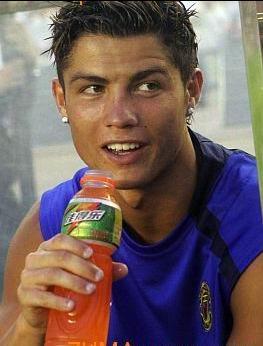
Cristiano Ronaldo hair styles

0 comments

Cristiano Ronaldo hair styles

Cristiano Ronaldo hair styles & fashion
Cristiano Ronaldo hair styles

Cristiano Ronaldo hair styles